
Sex Offender Checks in Lyon County
The Iowa Sex Offender Registry is the main public search channel. Iowa DPS and its Division of Criminal Investigation manage the statewide system. Lyon County Sheriff handles local registration for people who live in or establish residence in the county. These roles fit together. The state portal publishes the records that Iowa law makes public, while the Sheriff receives required local reports and addresses compliance concerns.
A sound search starts with the narrowest reliable fact. Try a known name, including a spelling variant if needed. For place-based safety research, select Lyon County or use the address, city, ZIP, map, or other location control displayed by the live portal. Search results can change when a person reports a move or when a record is updated. An empty radius search is not proof that no relevant person lives nearby.
The official Iowa registry interface shows how the public search begins.
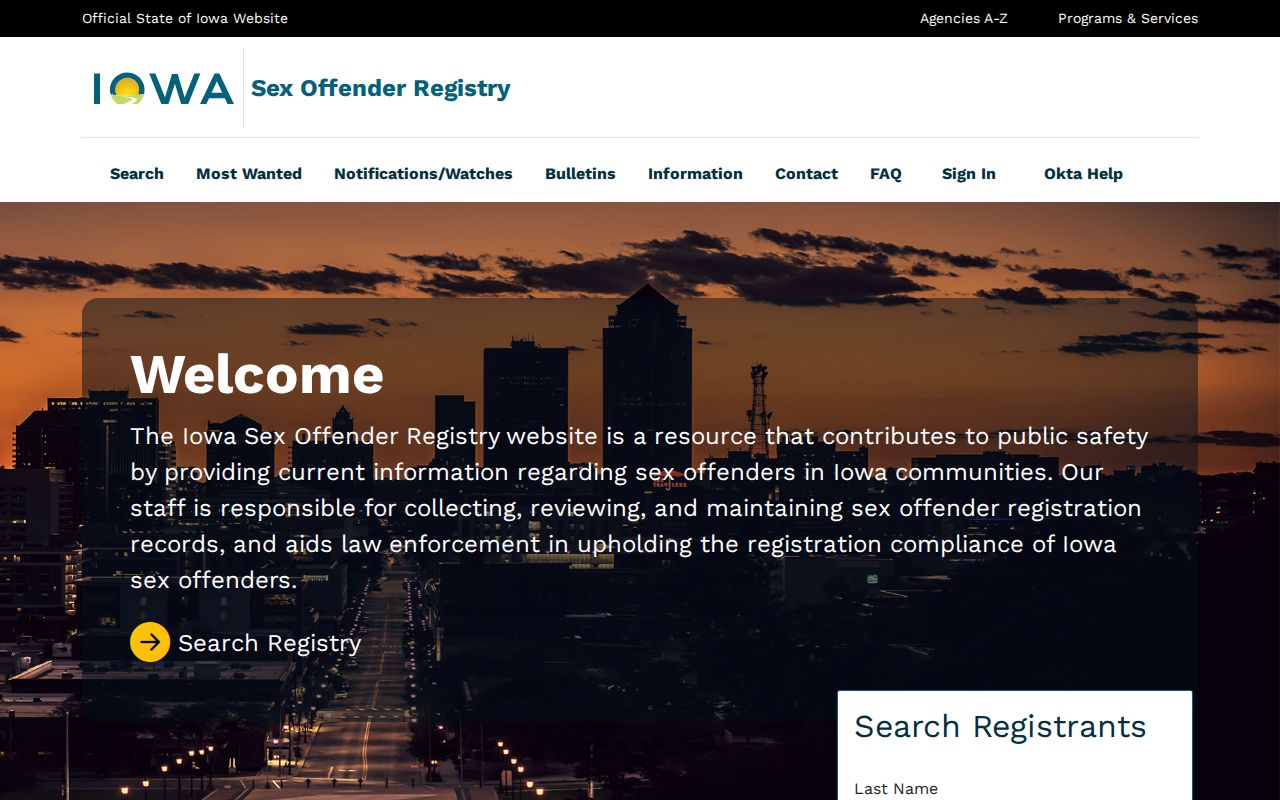
The portal is the right place to confirm the current filters and warning language before relying on a Lyon County result.
Lyon County Sheriff Offender Registry
Local registry work goes through the Lyon County Law Enforcement Center at 410 S. Boone Street, Rock Rapids, IA 51246. Call the Sheriff at 712-472-8300 for registration questions or to report suspected noncompliance. The official staff material identifies a sergeant whose duties include S.O.R., warrants, and drug investigation. That assignment confirms a specific local function without exposing any private registrant information.
The Sheriff’s role is not a separate public search database. A visitor who wants to browse public entries should start with the state registry. A person who must register, needs instructions about a reporting duty, or has a fact-based concern about a stale Lyon County address should call or visit the Sheriff. For emergencies, call 911. Written requests can seek only information that Iowa law allows the office to release.
The county’s official sex offender registry page explains the local duty and directs users to Iowa’s search.
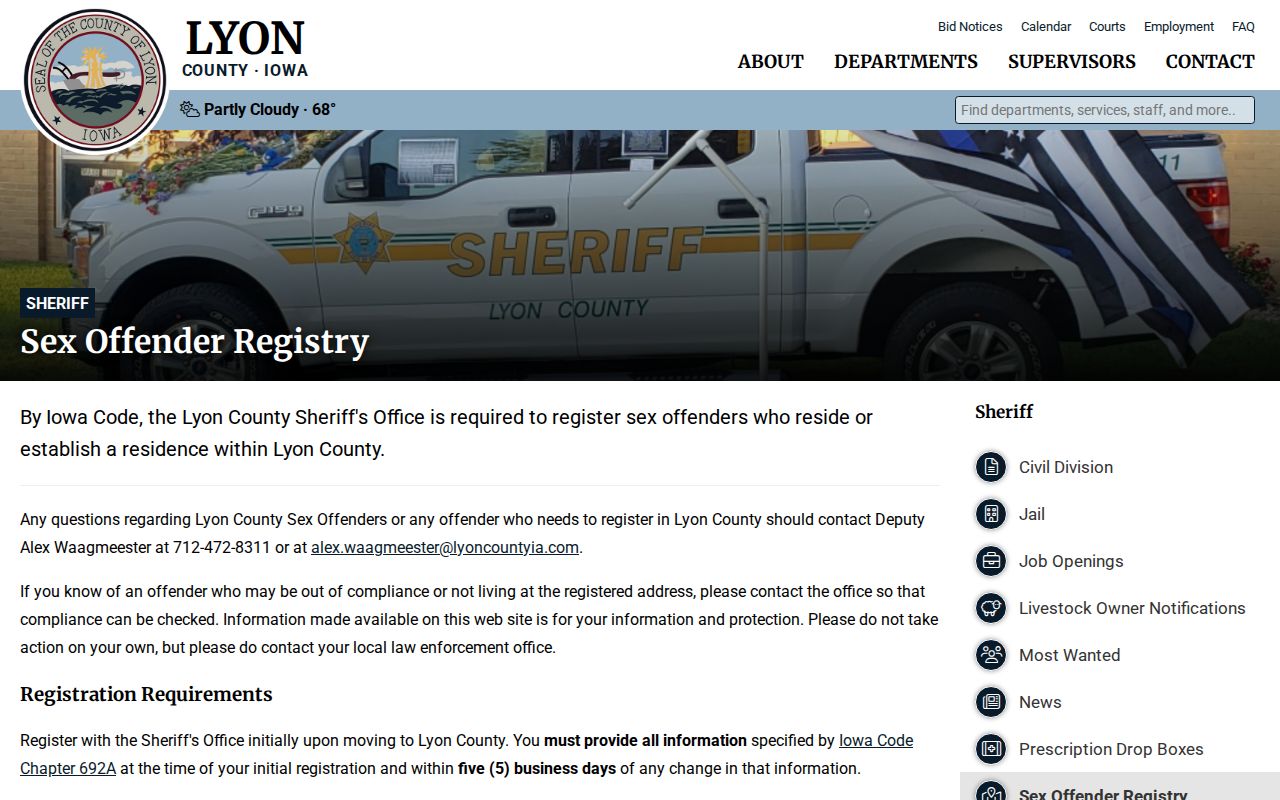
This local page is the bridge between a statewide public result and the office responsible for Lyon County registration.
How to Search the Iowa Sex Offender Registry
The portal offers name and location paths. Its exact live labels and radius choices may change, so use the controls actually shown rather than assuming a set distance. Accept any conditions or warning presented by the official site, then work from specific facts toward broader filters.
- Open the Iowa Sex Offender Registry and read its current terms and public-use warning.
- Choose a name search for a known person, or a location search for an address, city, ZIP, county, or available map area.
- Select Lyon County when a county filter is offered, then run the search and review possible matches with care.
- Open the relevant profile and compare identifiers, status, offense details, and agency information before drawing a conclusion.
| Field or control | Type | Required | Use |
|---|---|---|---|
| Search by name | Tab or form | Optional | Enter first and last name; test a careful spelling variant when needed. |
| Search by location | Tab or form | Optional | Use the address, city, ZIP, county, or radius tools displayed. |
| County | Dropdown | Optional | Select Lyon to focus on county results. |
| Map or list | View control | Optional | Switch between geographic and list views when enabled. |
| Search | Button | Yes | Runs the chosen criteria after any required warning is accepted. |
| Reset or clear | Button | No | Removes filters where the control appears. |
Note: A location result supports awareness, but it cannot guarantee that every reported address is current or that an omitted address is safe.
Lyon County Sex Offender Tiers
Iowa classifies qualifying offenses as Tier I, Tier II, or Tier III under Iowa Code section 692A.102. A tier is a legal category tied to duties and duration. It is not a forecast of a person’s future conduct, and it should not be treated as a simple danger score. Offense facts, age, prior events, another jurisdiction’s requirements, tolling, and a later court modification can affect the actual term.
Registration, verification, and public availability are also distinct. Registration places required information in the system. Verification is the duty to confirm or update it on the schedule set by law. Public availability controls what a visitor can see. Iowa Code sections 692A.108, 692A.120, and 692A.121 govern different parts of that chain. Readers should rely on the current status in the official record, not calculate a private person’s end date from a brief summary.
The 2026 Iowa Code chapter 692A supplies the controlling rules.
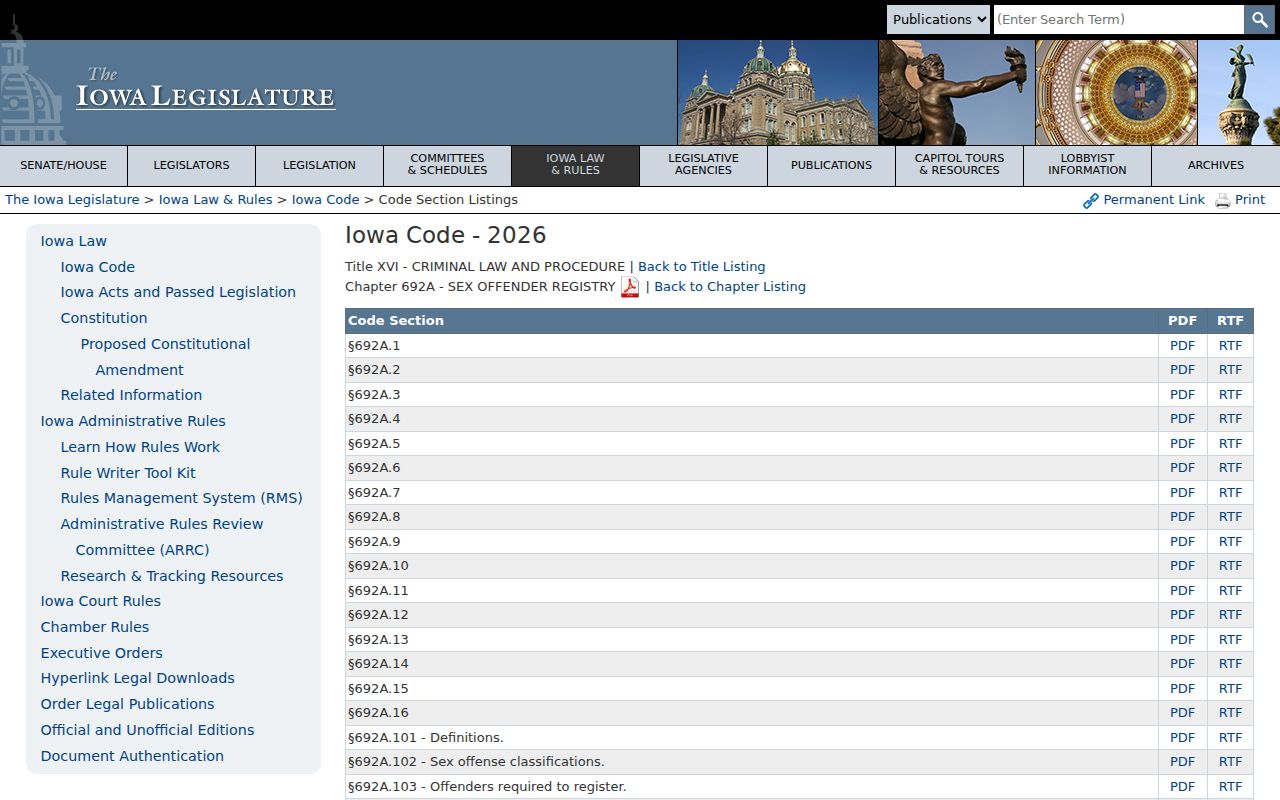
The statute provides the detail that a short tier label cannot convey.
Inside a Registry Profile
A public profile can identify the listed person and explain the registration basis. Iowa law may authorize name and aliases, a current photograph, physical descriptors, qualifying offense information, conviction jurisdiction and date, registration or compliance status, and relevant locations. Vehicle, internet identifier, scars, marks, tattoos, or agency details may also appear when public release is authorized. The victim’s identity is not a public registry field.
| Name and aliases | Public identity fields used to distinguish the listed person and known name forms. |
|---|---|
| Photo and description | A current image and authorized physical traits such as sex, race, marks, or tattoos. |
| Residence and locations | Address or other relevant locations to the extent Iowa law makes them public. |
| Qualifying offense | Offense, conviction jurisdiction, date, and related public classification details. |
| Tier and status | The statutory tier plus registration or compliance status shown by the official system. |
| Agency details | Public contact or supervising registry information that helps route a factual question. |
Match more than a name. Review the photograph and other public identifiers, then note the status and source agency. A common name can produce more than one result, while an alias can put the same person under another name. Public fields reflect the limits of chapter 692A, not a full arrest, court, or DCI criminal-history file.
Lyon County Cross-State Offender Searches
Lyon County sits in Iowa’s northwest corner near South Dakota and Minnesota. That location makes a single-state check less complete for a question that spans nearby communities or a recent move. The U.S. Department of Justice’s National Sex Offender Public Website, known as NSOPW, searches participating jurisdictions and routes users to the source registry.
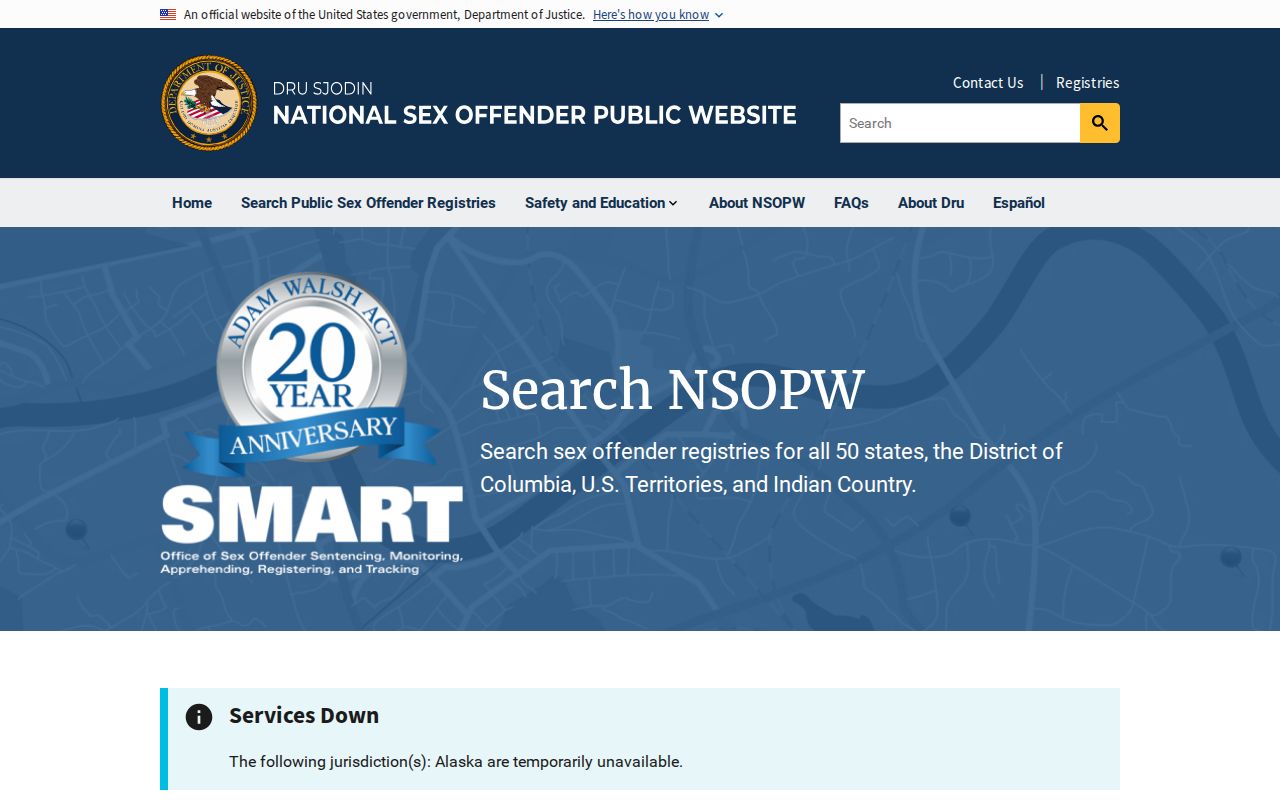
The national layer is useful for cross-border awareness, but each linked jurisdiction remains the official source for its own profile and current rules.
Run the Iowa search first when the address or person is tied to Lyon County. Add NSOPW if travel, residence, or family safety concerns reach across state lines. Different states publish different fields and update through their own systems. A national result should therefore lead back to the participating registry for verification, not replace it.
Iowa Registration Levels and Requirements
Iowa Code section 692A.106 sets the general duration framework. Section 692A.107 addresses tolling, which can pause or extend how time is counted in circumstances defined by law. Verification duties arise under section 692A.108. The research does not establish one universal verification frequency for every person within each tier, so the table avoids inventing a schedule and points readers to the current profile and Sheriff.
| Iowa tier | General duration | Verification and access caution |
|---|---|---|
| Tier I | Generally 10 years | Exceptions and tolling can apply; confirm the offense classification and current duty. |
| Tier II | Generally 25 years | Verification and public fields are governed by sections 692A.108 and 692A.121. |
| Tier III | Generally lifetime | Modification rules may apply; do not infer present danger from tier alone. |
Section 692A.128 addresses modification. Because the analysis is person-specific, the Sheriff, court record, and current registry status are better sources than an independent end-date estimate. Iowa also provides for registration fees or civil penalties, failure-to-comply offenses, and penalties for false information in sections 692A.110 through 692A.112.
Report Lyon County Registry Addresses
If a Lyon County address appears stale, record the public profile and the factual basis for the concern. Do not confront the listed person or household. Call the Sheriff at 712-472-8300 and provide a clear location, the profile detail at issue, and what was observed. The Sheriff can decide whether the information calls for an official compliance check.
A most-wanted or warrant page serves a different purpose. It is selective and cannot substitute for the full registry. Still, the Lyon County Sheriff’s official most-wanted channel is one documented route for public warrant information.
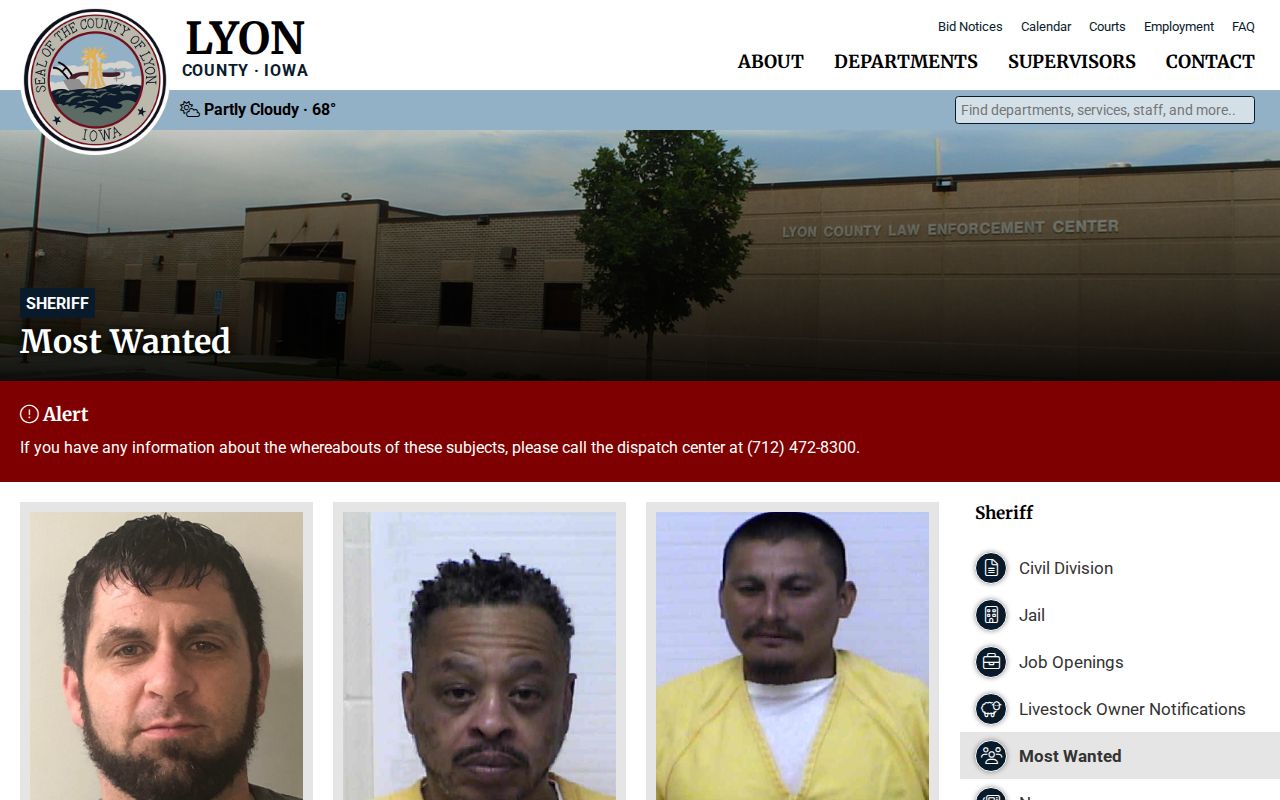
Use the registry for registration status and the Sheriff for a direct, fact-based report about possible noncompliance.
Lyon County Sex Offender Residency Rules
Iowa Code section 692A.114 includes a 2,000-foot restriction in specified child-centered circumstances. It is not a blanket rule for every registrant or every place. Statutory exceptions matter, as do the qualifying offense and personal facts. Sections 692A.113 through 692A.115 cover exclusion, residency, and presence restrictions, while section 692A.127 limits local government action.
The full statute, not a map estimate, controls. Measuring a straight line on a consumer map does not resolve whether a restriction applies. A public profile also should not be used to make up additional restrictions that Iowa law does not impose. For a question about a person’s reporting duty, contact the Lyon County Sheriff. For legal advice about how the statute applies, consult a licensed Iowa attorney.
Community Notification and Lawful Use
Registry access exists for public awareness and safety planning. Use it to learn what the official record says, discuss age-appropriate safety plans, and verify a concern through the responsible office. Do not publish private assumptions, infer a victim’s identity, or treat a tier as proof of current conduct. The portal’s current warning and terms govern every search.
Registry misuse can be a crime. Iowa Code chapter 692A does not authorize harassment, threats, intimidation, vigilantism, or using registry data to commit another offense. Report suspected noncompliance to the Lyon County Sheriff and call 911 for an emergency.
The Iowa arrest and warrant procedure chapter provides the legal setting for official enforcement action.
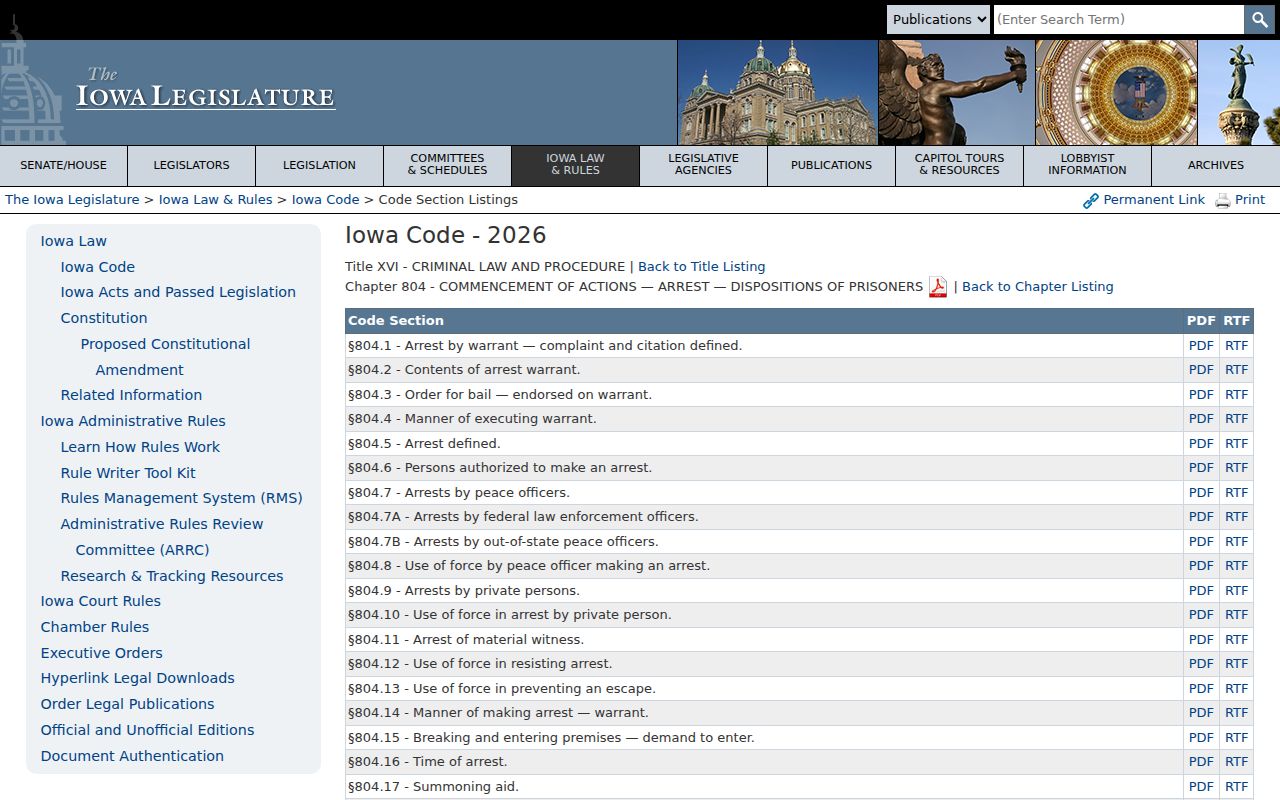
Only law enforcement should investigate or enforce a suspected violation. Public access does not grant a private power to punish anyone.